
Wetlands
Wetlands Definition
Wetlands are defined by EPA as "land that is saturated or inundated with water at a frequency and duration sufficient to support, and that under normal circumstances do support, a prevalence of vegetation typically adapted for life in saturated soil conditions."
Charactersitics that Determine the Presence of a Wetland
Hydrophytic Vegetation
Plant communities dominated by species adapted to grow in low-oxygen (anaerobic) soils caused by saturation or inundation. These plants have traits that let them survive flooding and saturated soils. Common Indicators include: Dominance of obligate wetland (OBL) or facultative-wet (FACW) species; Adaptations such as aerenchyma (spongy tissues), buttressed trunks, shallow spreading roots, adventitious roots, hypertrophied lenticels; Stress patterns in upland species at the margin (dieback where flooding persists)
For additional information check out USF's Atlas for Vascular Plants.
Hydric Soils
Soils that are saturated, flooded, or ponded long enough during the growing season to develop anaerobic conditions that favor hydrophytic vegetation. Field indicators can include: Gleyed (gray/blue) colors and low-chroma matrices; Redoximorphic features: iron/manganese concentrations (mottles), depletions, soft manganese nodules; Sulfidic odors or “rotten egg” smell, organic surface layers, muck or peat; Hydrogen sulfide, reduced iron, or puddled, very sticky textures when wet.
For additional information check out NRCS's Field Indicators of Hydric Soils
Wetland Hydrology
Evidence that the area is inundated or saturated at some time during the growing season. Primary/secondary indicators include: Saturated soil within the upper 12 inches; Water staining on trunks, elevated lichen lines, algal films; Drift lines, waterborne debris, wrack deposits; Drainage patterns, sediment deposits, oxidized rhizospheres along roots; Crayfish burrows, fish in isolated pools, aquatic invertebrates; Water marks on structures or vegetation after rain events.
Wildlife
Threatened & Endangered Species Surveys
JL Environmental provides comprehensive survey and consulting services for flora and fauna listed as threatened or endangered by the Florida Fish and Wildlife Conservation Commission (FWC) and the U.S. Fish and Wildlife Service (USFWS). We possess the expertise to navigate the complex regulatory landscape associated with protected species. From preliminary site assessments to the design of specialized survey protocols, we ensure your project remains compliant with state and federal regulations while effectively addressing project-specific constraints.
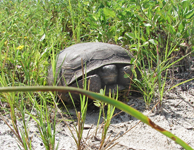
Florida Gopher Tortoise
The Gopher Tortoise (Gopherus polyphemus) is protected under Florida law as a Threatened species. Because gopher tortoises are "keystone species"—providing essential habitat for over 350 other wildlife species—the FWC enforces strict permitting requirements regarding their protection and relocation. If your project involves potential land clearing or development, an assessment for gopher tortoise burrows is a critical first step. JL Environmental provides expert guidance to ensure compliance:
Professional Surveys: We conduct thorough site surveys to determine the presence and location of tortoise burrows.
Permitting & Authorized Agent Services: As an FWC Authorized Agent, JL Environmental is qualified to manage the permitting process, including applications for relocation when burrows cannot be avoided.
Avoidance & Mitigation Strategies: We help project teams identify opportunities to avoid impacts by adhering to FWC guidelines, which often negate the need for complex relocation permits if specific avoidance buffers are maintained.
Check out this site for more information: FFWCC's Tortoise Page



Photography
-

Underwater -
Wildlife -
Miscellaneous